
NewsletterIssue | February 2013
Highlights
February 22 2013
Price volatility, increasing demand, climate pressures, and a growing range of choices have made deciding on electricity supply options a very complex exercise for policymakers. The Model for Electricity Technology Assessment (META), developed by ESMAP, is intended to help negotiate this difficult terrain. META provides a comparative assessment of levelized costs for a range of electricity supply options, including renewable energy. One of the most prominent features of the model is that it integrates environmental externalities, including the health costs of pollution and international carbon prices.
June 12 2017
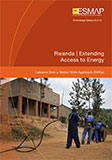
In recent years, different approaches to providing aid have emerged. The sector-wide approach (SWAp) is a country-led, results-focused framework that brings together development partners and other stakeholders to coordinate aid within a sector. A just-published ESMAP report provides a number of key lessons realized from the Rwanda Energy SWAp for development partners and governments considering using such an approach. Overall, the experience in Rwanda shows that SWAps in the energy sector can achieve success. Access to energy within the country has increased and more than US$ 200 million has been raised toward the costs of the electrification program.

June 12 2017
ESMAP was highlighted in the World Bank’s recently published 2012 Trust Fund Annual Report as an example of a trust fund that had “fostered innovation in development.” It noted that ESMAP’s approaches to efficient and sustainable energy development has been scaled up in recent years through US$ 14 billion in World Bank Group lending. Use the link below to download the report; information about ESMAP can be found on page 17.
Resources
Events
Learning and Collaboration
Published on: 02/22/2013