
HIGHLIGHT |
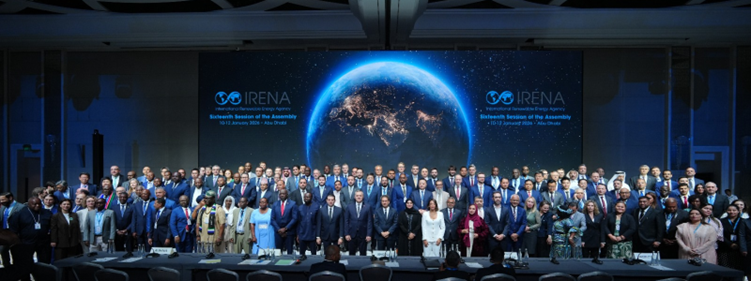 |
ESMAP at IRENA AssemblyAt the 16th IRENA Assembly (January 10-13), ESMAP’s SRMI and IRENA launched a joint report on Renewable energy auctions and Design for risk allocation. Participating in the Assembly, Global Director for Energy, Demetrios Papathanasiou talked about World Bank Group key renewable energy initiatives and the support provided by ESMAP. He underscored the World Bank Group’s commitment to Small Island Developing States (SIDS) through SIDS-RISE, a new platform to scale renewable energy, storage, and grid resilience while mobilizing private capital. He called for catalytic public finance to advance clean cooking as core infrastructure, and highlighted initiatives promoting gender equality in the energy sector. He also emphasized the need for coordinated action and scalable approaches to achieve SDG7 goals. >> Read the Report | Learn more
|
BOARD APPROVALS |
 |
World Bank Group Supports Sustainable Hydropower Development in Bhutan with Innovative Financing PackageESMAP supported Bhutan’s development of the 1,125 MW Dorjilung hydropower plant. The ESMAP grant funded updates to the project’s design and environmental assessments, aligning with international standards. It also strengthened institutional capacity. For example, two independent panels were established to ensure technical and environmental compliance, and over 350 officials were trained on international knowledge exchange.
|
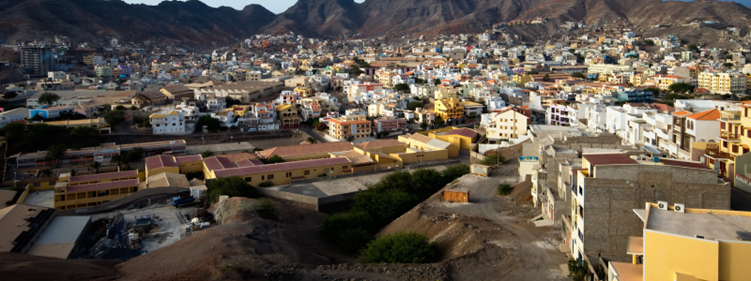 |
World Bank Scales Up Support to Cabo Verde’s Energy Transition and Universal AccessESMAP played a pivotal role in enabling Cabo Verde’s Renewable Energy and Improved Utility Performance Project (REIUP). Through a US$500,000 contribution, ESMAP advanced the country’s renewable energy agenda by conducting market sounding and preparing 200 MW of bankable solar and wind projects. It also delivered an analysis of sustainable business models for distributed generation and energy efficiency—critical for sectors such as tourism and the blue economy—and convened a workshop in Praia to share recommendations. In addition, ESMAP supported job creation and helped narrow the gender gap by providing training on rooftop solar operations and maintenance and business incubation. Building on this groundwork, the World Bank subsequently approved US$13.30 million in concessional financing through IDA to implement REIUP.
|
FEATURE STORY |
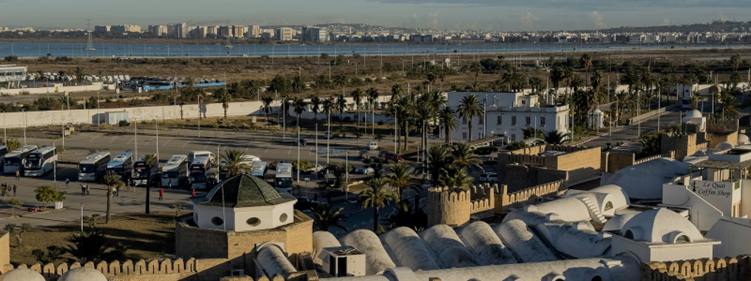 |
From Fossil Fuel Reliance to Renewable Ambition: How Tunisia and Burkina Faso Are Shaping Africa’s Clean Energy FutureIn 2025, ESMAP' SRMI launched with the African Development Bank (AfDB), the Morocco Renewable Energy Agency (Masen), GIZ GET.transform, the Agence Française de Développement (AFD), and the International Renewable Energy Agency (IRENA) the SRMI-ESMAP Renewables Academy. Bringing together 72 energy sector leaders from 17 Francophone African countries, the Academy where ministry officials, regulators, and utility staff can learn how to prepare bankable renewable energy projects, negotiate fair contracts, and advocate for policy reform. The Academy also enables peer exchange, problem solving across and builds a community of practice – exemplifying the World Bank’s new approach to global knowledge sharing.
|
BLOGS |
|
Long Duration Energy Storage: Powering Lives and Opportunities in Developing CountriesESMAP showcased its leadership in advancing Long Duration Energy Storage (LDES) by organizing a multinational study tour—together with IFC and MIGA—that brought experts from developing countries to learn about cutting edge LDES technologies, market developments, and real world applications, all aimed at accelerating adoption in contexts where reliable power is most needed. LDES is becoming a transformative solution for developing countries by enabling dependable, renewable, long duration power that can significantly reduce outages, support essential services, and unlock economic growth—while institutions like ESMAP are helping countries build the knowledge and partnerships required to deploy these technologies at scale.
|
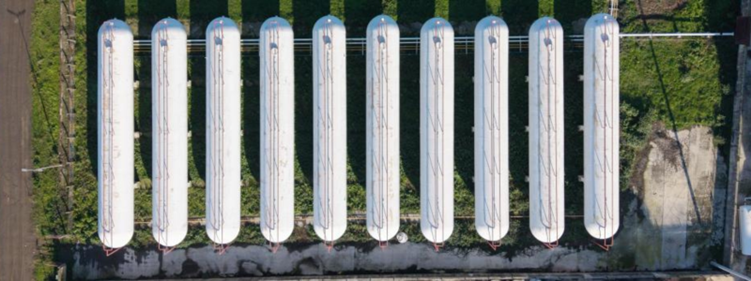 |
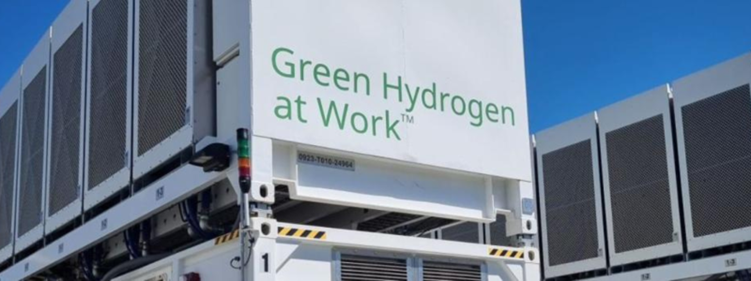
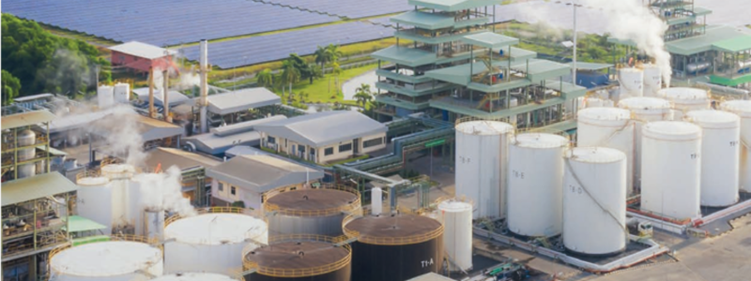
Building a Global Hydrogen Economy: The Role of Emerging MarketsESMAP convened representatives from more than 14 countries, technical experts, and leading hydrogen organizations to share knowledge and coordinate strategies for hydrogen development. By co organizing the H4D meeting, it helped strengthen cooperation among EMDCs, Japan, and international institutions, building momentum for global collaboration in the emerging hydrogen sector. Through this platform, ESMAP emphasized the role of developing countries as strategic partners in global hydrogen value chains, highlighting how they contribute to shaping markets, advancing technologies, and building industrial capacity. Emerging markets and developing countries possess the natural resource advantages, strategic partnerships, and growing institutional support needed to become leaders in the global hydrogen economy—not only as producers of clean hydrogen, but also as creators of high value, hydrogen based industries. >> Read the Full Blog | Follow the Conversation on LinkedIn
|
PUBLICATIONS |
|
REPORT | Energy Subsidy Reform in Action | Long-Run Impacts of Energy Prices on Consumer SpendingThis analysis uses a 40‑year dataset from 142 countries to examine national energy cost share—the ratio of energy costs to GDP—and how it responds to changes in energy prices, economic activity, efficiency policies, and broader macroeconomic conditions. It finds that while energy cost shares rise and fall with energy prices in the short run, economies increasingly adapt over time through structural change, innovation, and efficiency gains. Adaptation speed varies widely across countries, influenced by differences in macroeconomic structure, human capital, financial development, and energy sector characteristics. Despite long‑run improvements in resilience, short‑run impacts from price spikes remain significant and adjustment is often slow, underscoring the importance of targeted support for vulnerable households and assistance for firms during periods of high energy prices.
|
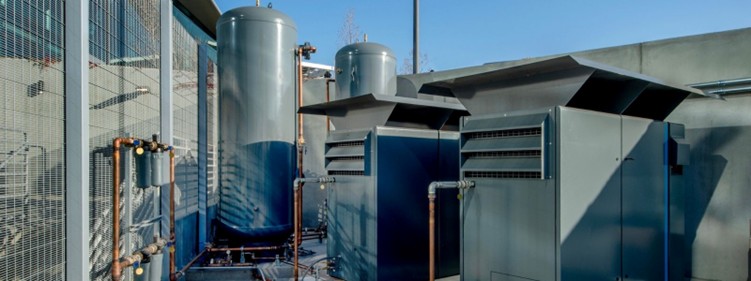 |
LIVEWIRE | Publication: Compressed Air Energy Storage: A Case StudyTo maximize the contribution of variable renewable energy sources, long duration storage is critical. The reason? Sources like wind and solar often generate excess power at off-peak times. The successful Yingcheng compressed air energy storage project in China is currently the world’s largest—and the first of its kind to operate without the use of supplemental fuels. With a five-hour discharge at full capacity of 300 MW, the project is a breakthrough for long-duration storage technology at such scale and has significant replication potential for other countries. >> Download the Livewire | Follow the Conversation on LinkedIn
|
RECENT EVENTS |
 |
|
 |
 |
|
NewsletterESMAP Newsletter | January 2025
Published on: 02/18/2026