News
From Fossil Fuel Reliance to Renewable Ambition: How Tunisia and Burkina Faso Are Shaping Africa’s Clean Energy Future
Meet the Leaders and the Knowledge Platform Empowering Africa’s Energy Transition
Across the African continent, the energy transition is underway. For decades, countries have depended on imported fossil fuels to power their economies, expensive and polluting energy sources that leave them vulnerable to market shocks and instability. Now, as the world pivots towards clean energy, countries like Tunisia and Burkina Faso are stepping forward with plans to break free from this dependence and chart a new path powered by the sun and wind. At the heart of this transformation are not just ambitious targets and policy reforms, but the dedication of professionals and the support of the World Bank’s Knowledge Academy that equip leaders to drive change.
Africa’s energy story has long been a tale of challenges: widespread reliance on imported oil and gas, frequent power outages, and millions living without electricity, especially in rural areas. For Tunisia and Burkina Faso, the burden of importing fossil fuels has shaped their economies and limited their growth. In Tunisia, around 95% of electricity is generated from imported natural gas. Burkina Faso’s grid, meanwhile, used to be powered mostly by imported diesel and heavy fuel oil, making electricity costly and unreliable.
But with the global momentum for renewables accelerating, the challenge for African countries is no longer “if” a transition is possible, but “how”—and who will lead the way.
Tunisia’s Bold Journey to Implement Ambitious Targets
Tunisia is rapidly becoming a renewable energy hub in North Africa. The government has set an ambitious goal: by 2030, 35% of the nation’s electricity generation should come from renewables. This transformation is driven by large-scale competitive tenders. The launch of a 500 MW solar tender in 2019 marked a turning point from a scale and price standpoint amidst COVID-19 and Ukraine war crisis. End of 2025, the first 100 MW solar power plant in Metbasta started operating and all the other projects are expected to complete construction in 2026.
Central to Tunisia’s progress is Olfa, a senior legal expert at the state utility STEG. Her expertise shapes the frameworks that allow the country to launch and negotiate renewable projects, ensuring that policies are not only ambitious but workable and attractive to investors. Under the leadership of the Ministry of Industry, Mines, and Energy (MIME), Olfa's work has helped Tunisia roll out additional 1.7 GW of solar and wind tenders in successive rounds, aiming for more than 8,350 MW of renewable capacity by 2035.
Her efforts extend beyond policy paperwork. Olfa is helping create a regulatory environment where bankable power purchase agreements, streamlined project authorizations, and standardized documents are the norm.
Reliability and Affordability in Burkina Faso
Burkina Faso was able to attract investors to finance and operate six large-scale solar projects, representing half of its installed capacity. This played an important role in drastically reducing the cost of electricity and increasing reliability.
Kibsa, a senior renewable energy engineer working for the Government of Burkina Faso, stands at the forefront of the country’s energy transition. Supported by the World Bank’s Solar Energy and Access Project (SEAP), he is helping develop the country’s first major solar projects paired with battery storage—150 MWp of solar power and 120 MWh of batteries. These projects are the next step in developing affordable power with higher penetration of solar thanks to battery storage. With support from the World Bank Group’s Energy Sector Management Assistance Program (ESMAP)’s Sustainable Renewables Risk Mitigation Initiative (SRMI) and the African Development Bank (AfDB), Burkina Faso is moving toward a future where power is affordable, local, and reliable.
The Human Factor: Impact and Knowledge Sharing
The energy transition is ultimately a human story. For Olfa and Kibsa, their motivation goes beyond professional achievement. They are driven by a desire to create lasting impact in their countries. They are part of a new generation of African energy professionals who see renewable energy as a catalyst for social welfare, economic independence, and regional cooperation. By preparing bankable projects, negotiating fair contracts, and advocating for policy reforms, they are turning aspiration into action.
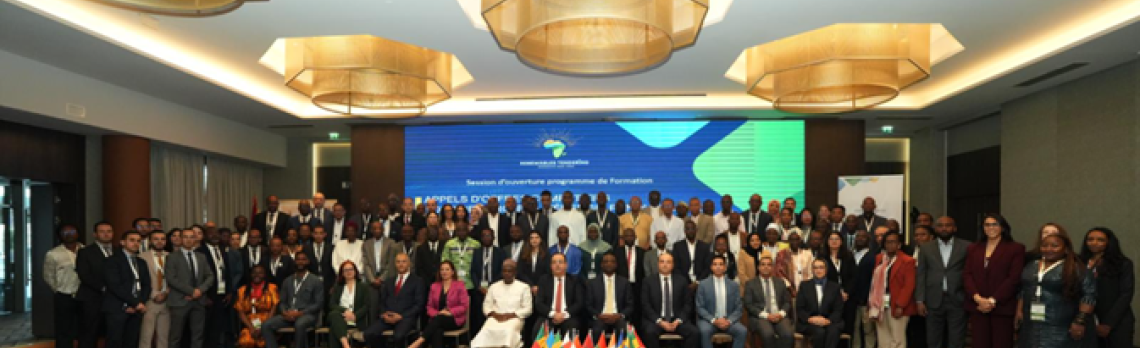
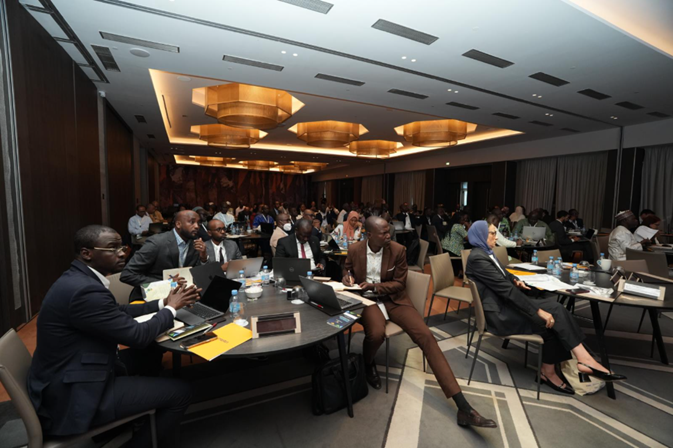
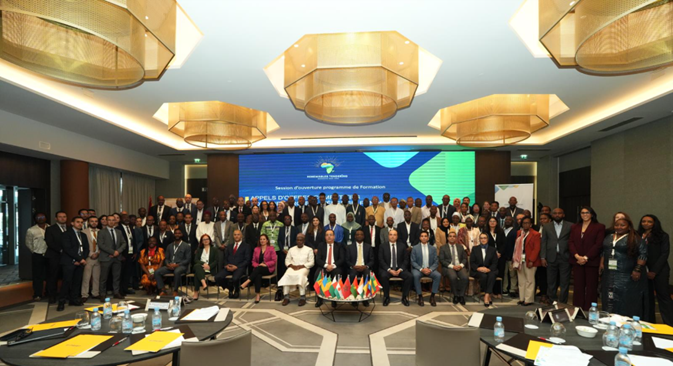
Behind the scenes, SRMI is playing a pivotal role from technical and strategic advisory support to capacity building. In 2025, SRMI launched with the together with AfDB, the Morocco Renewable Energy Agency (Masen), GIZ GET.transform, the Agence Française de Développement (AFD), and International Renewable Energy Agency (IRENA) the SRMI-ESMAP Renewables Academy. Bringing together 72 energy sector leaders from 17 Francophone African countries, the Academy creates a space for learning, peer exchange, and problem solving across ministries, regulators and electric utilities. It is a platform for building a community of practice.
The Academy’s nine-month practitioner program combines online modules with face-to-face workshops, the first of which took place in Rabat in October 2025. Here, professionals like Olfa and Kibsa engaged in intensive learning, focusing on risk mapping, tender governance, financing structures, and power purchase agreement models.
Participant feedback has been overwhelmingly positive. “It was an opportunity to have very rich and constructive exchanges with African countries and with neighboring countries as well. It allowed us to gain an overall vision and to share experiences,” says Olfa. The program’s emphasis on practical tools and comparative learning helps participants see where their own countries stand and what steps they need to take to accelerate progress.
Credit: MASEN/World Bank
In June 2026, the cohort will reconvene—this time in Ouarzazate, home to Morocco’s Noor solar complex. Delegates from Benin, Burkina Faso, Côte d’Ivoire, Mali, Senegal, Togo, Cameroon, Central African Republic, Gabon, Niger, Chad, Burundi, Madagascar, Rwanda, Comoros, Mauritania and Tunisia will continue to refine their country action plans, deepen their technical work on financing and regulatory reform, and continue building a continent-wide network of renewable energy practitioners.
ESMAP’s work through SRMI exemplifies the World Bank’s new approach to global knowledge sharing—a “Knowledge Bank” that empowers leaders by bringing together expertise, data, and experience from around the world. By connecting professionals like Olfa and Kibsa with peers and technical experts, ESMAP ensures that knowledge is not siloed but shared, adapted, and applied.
This model of collaborative learning and support is already bearing fruit. Countries are moving from isolated pilot projects to scalable national programs. Best practices are spreading, not just in policy design but in real-world implementation.
As Africa’s energy transition accelerates, the stories of Tunisia and Burkina Faso offer hope and inspiration. Their journeys show that with vision, leadership, and coordinated global support, it is possible to break free from fossil fuel dependence and build a resilient, clean energy future. Empowered professionals like Olfa and Kibsa, supported by ESMAP, SRMI, and the Knowledge Bank, are the catalysts for this change.
Credit: MASEN/World Bank