Publications
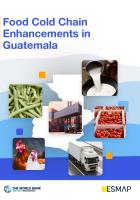
Guatemala's agrifood sector is a vital component of its economy, contributing 10.2% to economic activities and employing 32% of the active population. Despite its significance, the sector faces numerous challenges, including a dualistic structure where large players integrated into global value chains coexist with many small producers who struggle with access to finance, markets, and productivity. These challenges are exacerbated by climate change and limited access to agricultural best practices, leading to widespread food insecurity, particularly among Indigenous communities and low-income families.
Infrastructure investment in Guatemala is among the lowest in Latin America, affecting the agrifood sector's performance. Despite recent increases, infrastructure competitiveness remains low, with Guatemala ranking poorly in road connectivity. Cold chain investments are inadequate, leading to post-harvest losses and barriers to market access. The country's refrigerated warehouse capacity is significantly lower than neighboring countries, and unreliable electricity supply further hampers cold chain development.
Cold chain implementation holds promise for improving agrifood value chains, particularly in export markets for peas, green beans, and papayas. Solar energy systems could enhance energy-efficient cooling facilities, reducing costs and addressing electricity access challenges. Energy-efficient technologies like evaporative cooling chambers and improved insulation could be adopted in the fruit value chain.
Guatemala's National Policy on Energy Efficiency 2023-2050 outlines goals for efficient energy use and management, supporting the development of energy-efficient cold chains. Policy recommendations include fostering associativity among farmers, developing clean energy infrastructure through Public-Private Alliances, and supporting long-term financing for climate-smart agriculture. Expanding public programs and strengthening guarantee funds could incentivize private credit and investment. Exploring energy-efficiency carbon credit offsets could provide innovative financing sources, contingent on robust Monitoring, Reporting, and Verification mechanisms.
By implementing these strategies, Guatemala can enhance its cold chain infrastructure, improve food quality and safety, and expand its reach in higher-quality markets, contributing to the overall sustainability and competitiveness of its agrifood sector.
 |  |
World Bank. 2025. Food Cold Chain Enhancements in Guatemala. ESMAP Paper.© World Bank. http://hdl.handle.net/10986/43103 License: CC BY-NC 3.0 IGO.