



ESMAP Newsletter | September 2026
Highlight
High-Level Event on Clean Cooking During the UN General Assembly
The event was hosted by the Governments of Kenya and Norway and the International Energy Agency (IEA) on the margins of the UN General Assembly.
Clean cooking is a core part of the World Bank Group’s energy engagement. Through ESMAP’s Clean Cooking Fund, the World Bank Group has expanded its portfolio to strengthen markets and mobilize private investment. We know what works and are ready to work with partners to scale proven solutions.
>> Watch the Replay | Follow the conversation on LinkedIn
ESMAP at the SDG7 Action Forum during the United Nations General Assembly High-Level Week: Turning Ambition into Action on SDG7
On the margins of the United Nations General Assembly High-Level Week (UNGA HLW), ESMAP's Senior Energy Specialist, Michelle Hallack, and Senior Gender Specialist, Samantha Constant, joined governments, United Nations entities, the private sector, civil society, and a broad range of stakeholders to accelerate progress toward Sustainable Development Goal 7. The forum confronted an urgent reality: while SDG7 remains a critical driver of global development, progress is too slow and too uneven to meet its targets by 2030, with discussions centering on closing persistent gaps in energy access and transition for the countries and communities furthest behind.
Reflecting ESMAP's commitment to gender-responsive energy solutions, Samantha presented alongside Sheila Oparaaocha, Executive Director of ENERGIA, on "Making Gender Data Matter: A Shared Agenda for Sustainable Energy." The session argued that the sector's gender challenge is not simply a data gap but a data-use gap — national statistics track households rather than the individuals within them, leaving women's experiences of energy access, affordability, and economic opportunity largely invisible. A growing coalition of partners, including ESMAP, ENERGIA, IEA, IRENA, UNSD, and UN Women, is working to change this through a concrete roadmap to develop standardized gender indicators across 50 priority countries by 2027, combining global expertise, regional reach, and country ownership to ensure women are at the center of the energy transition.
>> Learn more
G20 Energy Abundance Ministerial Meeting | Clean Cooking Roundtable
Fanny Missfeldt-Ringius, ESMAP Manager at the World Bank Group, emphasized at the G20 Clean Cooking Roundtable that market-based solutions are essential to reach the 2.1 billion people still without clean cooking. She also underscored the importance of investment across the full ecosystem —from energy supply and distribution to local manufacturing, consumer finance, and after-sales service— supported by strong policies, institutions, concessional finance, and private capital to build sustainable markets.
>> Learn more about the Clean Cooking Fund | Follow the conversation on LinkedIn
Board Approval
World Bank Group Expands Subnational Infrastructure Finance in Ecuador
ESMAP supported the preparation of the Board-approved Ecuador Resilient Infrastructure Project, a US$200 million loan from the International Bank for Reconstruction (IBRD) complemented by US$50 million in co-financing from the Spanish Agency for International Development Cooperation (AECID) — Phase 1 of a broader Multi-Phase Programmatic Approach with an overall IBRD envelope of US$800 million. This project directly advances ESMAP's FY2025–2030 Business Plan objectives of ensuring energy sector resilience and adaptation to climate change and other shocks, and of mobilizing tailored finance and building institutional capacity for sustainable infrastructure. The project will channel long-term financing through Banco de Desarrollo del Ecuador B.P. (BDE B.P.) to Ecuador's subnational governments and public enterprises, supporting investments across energy, transport, urban development, disaster resilience, and affordable housing — while progressively strengthening BDE B.P. as an intermediary development finance institution capable of diversifying its funding sources and crowding in private and institutional capital. The project exemplifies a strong One World Bank Group approach, jointly prepared across the Infrastructure Global Practice (energy, urban-resilience-land, and transport), with close collaboration from Finance, Competitiveness, and Innovation (FCI), and active coordination with the International Finance Corporation (IFC), and the WBG Multilateral Investment Guarantee Agency (MIGA).
World Bank Group Backs transformation of Energy-Intensive Industries in Brazil
ESMAP helped turn Brazil’s electricity grid into an industrial advantage by providing decarbonization roadmaps, hydrogen market analysis, and pipeline development support for energy-intensive industries, while helping secure Clean Technology Fund financing.
This work supported a US$1 billion IBRD loan and a US$60 million Clean Technology Fund loan, expected to mobilize a further US$1.8 billion for low-carbon industries, strengthen competitiveness, cut emissions, and create quality jobs.
>> Read the Press Release | Follow the conversation on LinkedIn
India’s Solar Rooftop Program to Boost Clean Energy, Create Jobs, and Unlock Private Capital
The World Bank Group's Board of Executive Directors recently approved financing to accelerate India's national solar rooftop program, helping bring clean energy to millions of households, create an estimated 1.7 million jobs, and mobilize private capital for distributed renewable energy deployment.
The financing package includes an US$820 million loan from IBRD, a US$60 million concessional loan from the Clean Technology Fund, and a US$10 million grant from IBRD’s Livable Planet Fund. In addition, the World Bank will mobilize US$4.2 billion in private financing in the form of commercial loans enabling them to install solar rooftops for households. The project received support from ESMAP during preparation and design, including efforts to address barriers limiting women's participation in the rooftop solar sector.
The program incorporates targeted outreach, collateral-free financing, capacity building, and support for women-owned households and enterprises. These measures aim to expand women's access to solar assets, increase women's participation in the solar workforce, and strengthen women-led businesses in the rooftop solar market.
>> Read the Press Release | Related
World Bank Group and Morocco Partner to Unlock the Power of Next-Generation Hydropower
The World Bank Group Board of Directors recently approved US$265 million to support the Ifahsa Pumped Hydropower Storage Project in Morocco, a major clean energy infrastructure investment in northern Morocco and one of the most significant of its kind on the African continent.
ESMAP's Hydropower Development Facility provided technical expertise and funding to help prepare the project for financing from the World Bank Group and other partners. This included reviewing the project's technical, financial, environmental, and social aspects, improving dam safety, and updating its economic and financial analysis.
The project will strengthen the reliability and resilience of Morocco’s electricity system by providing flexible storage capacity to support the integration of higher levels of renewable energy generation and will provide Moroccan electricity consumers – including households and businesses – with a more reliable, cleaner supply of electricity.
Strengthening Grid Reliability and Industrial Energy Efficiency
The World Bank Group Board recently approved Cambodia’s Sustainable Energy Transition Project, financed by a US$110 million IDA credit from the World Bank’s International Development Association, along with a US$5 million grant from the Energy Sector Management Assistance Program (ESMAP), will help Cambodia to transition to green economy. The investment will ultimately benefit electricity consumers, public institutions, industrial enterprises, renewable energy developers, service providers, and energy-efficiency equipment suppliers, creating more and better jobs in the sector.
ESMAP’s long-standing analytical and advisory work helped shape the policies underpinning these investments. Its publication Mini Grids in Cambodia: A Case Study of a Success Story informed approaches to expanding rural areas.
The Royal Government of Bhutan and the World Bank Sign Financing Agreements for the Dorjilung Hydroelectric Power Project
The Royal Government of Bhutan and The World Bank Group recently signed financing agreements totaling US$515 million for the 1,125 MW Dorjilung Hydroelectric Power Project, which will account for about one-third of Bhutan’s total energy generation, drive economic growth through access to affordable electricity and clean energy exports, and create jobs.
“Amid global fuel supply disruptions, the Dorjilung Hydroelectric Power Project represents a model for building energy security that is clean, sustainable and resilient,” said Xavier Furtado, the World Bank Group’s Country Manager for Bhutan.
An ESMAP grant funded key project planning and environmental studies, improving the project's design with better geotechnical data and ensuring it met Bhutanese and World Bank Group standards
ESMAP also helped strengthen the capacity of the institutions leading the project, providing specialized software, technical training, expert guidance, and knowledge exchanges that helped build local expertise — resulting in over 355 officials trained.
Advancing Energy Security and Jobs Through the Transformative Rogun Hydropower Project
The World Bank Group Board of Executive Directors approved the second phase of financing for the Rogun Hydropower Plant (HPP) supported by a US$300 million grant. This phase is expected to create over 30,000 direct and indirect jobs, provide 10 million people in Tajikistan with improved access to affordable, reliable, and sustainable electricity, and expand renewable energy generation in Central Asia.
ESMAP's Hydropower Development Facility has played a critical role providing technical cross-support and grants to support dam safety, the economic and financial assessments, and the finalization of the Environmental and Social Impact Assessment. When complete, Rogun will deliver 3,780 MW of installed capacity and 6 TWh of energy storage — enough to transform Tajikistan's winter energy security, support regional energy trade, and meaningfully contribute to Central Asia's decarbonization agenda.
Mexico Building Sustainable Value Chains Project
The World Bank Board recently approved the US$249.63 million Mexico Building Sustainable Value Chains Project, comprising a US$200 million IBRD loan and US$49.63 million from the Canada Clean Energy and Forest Climate Facility. Implemented by NAFIN, it will expand sustainable financing for Mexican firms and create or preserve 7,000 jobs.
ESMAP’s US$4 million grant will fund technical assistance, capacity building, sustainability investments, and a pipeline of eligible operations, helping NAFIN extend financing and support to smaller firms entering sustainable global value chains.
>> Learn more
Burundi SOLEIL-Nyakiriza: Second Additional Financing
The World Bank Board recently approved the Second Additional Financing for the SOLEIL-Nyakiriza project bringing an additional US$8.9 million to the project, comprising a US$5 million IDA grant and a US$3.93 million Global Environment Facility (GEF) grant.
A cornerstone partner since project design, ESMAP has provided technical assistance to develop scalable decentralized energy access in Burundi, shaping the electrification of schools and health facilities and an innovative maintenance system linking decentralized structures, a National Maintenance Center, and health-sector Performance-Based Financing.
ESMAP also helped establish and operationalize FESEC (Fonds d'Énergie Solaire et de Cuisine Propre/Solar and Clean Cooking Energy Fund), Burundi’s main private-sector financing platform for off-grid solar and clean cooking. It supported grant and results-based financing mechanisms, innovative financing windows, private-sector assistance, and quality and verification systems. Together, these contributions are building the institutional, technical, and market foundations to scale decentralized energy access, with lessons for Mission 300 and similar programs in fragile contexts.
>> Learn more
News
The Battery Under the Seat: How Uganda is Gearing Up for Electric Mobility at Scale
In Kampala, a boda-boda rider swaps a spent battery for a charged one in minutes — no fuel queue, no waiting to charge. It's a small transaction pointing to a bigger shift: Uganda's battery-swapping network has more than doubled in under two years, from about 150 stations in mid-2024 to over 350 by late 2025.
That speed raises a quieter question — is the grid ready? At the request of Uganda's Ministry of Energy and Mineral Development, a new World Bank study, supported by ESMAP and the Quality Infrastructure Investment Partnership, set out to answer it. The added electricity demand looks manageable overall, but when and where vehicles charge matters on a distribution network already under strain — smart charging at swapping stations alone could roughly halve the modeled cost of added energy losses in Greater Kampala.
APPLY NOW - Launch of Fourth Edition of the Women in Energy Storage (WES) Mentoring Program
The Women in Energy Storage Mentoring Program is back for its fourth edition, connecting emerging professionals with senior leaders who can help shape their next career steps. ESMAP, through the Energy Storage Partnership Secretariat it hosts at the World Bank Group, is again partnering with the Global Women’s Network for the Energy Transition (GWNET) on this seven-month initiative. The program helps junior and mid-level women professionals strengthen technical and leadership skills, build international networks, and advance their careers. It is open to women with 2–6 years of relevant experience from IBRD/IDA borrowing countries across Africa, MENA, South Asia, Europe and Central Asia, and Latin America and the Caribbean. The outcomes underscore the value of a comprehensive ecosystem approach: 94% of participants in the previous cohort rated their mentorship experience positively, and all reported a positive impact on their personal and professional development. Senior professionals—women and men—are also invited to serve as mentors, with a commitment of roughly 1–1.5 hours per month.
Applications for both mentees and mentors are due by October 9, 2026, in English.
>> Apply
Floating Solar PV Roadmap for Kerala
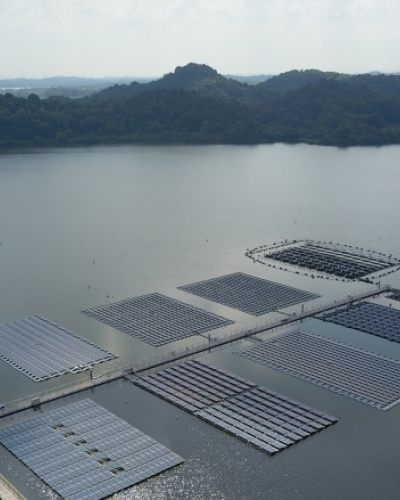
On July 31st, India approved the Pradhan Mantri Surya Sarovar Yojana — a scheme for 5,000 MW of floating solar PV with co-located battery energy storage systems.
Before large-scale programs move forward, they often rely on years of analysis, planning, and technical preparation. In Kerala, ESMAP-supported studies assessed floating solar potential across three reservoirs — Kallada (Thenmala), Pothundy, and Karapuzha — helping build the evidence base for future development opportunities in the state.
This work is a joint effort with partners at ANERT (Agency for New and Renewable Energy Research and Technology) Kerala, k r jyothilal ias, Narendra Nath Veluri IFS, the Kerala State Electricity Board (KSEB), and the Ministry of New and Renewable Energy (MNRE), as well as The World Bank Group colleagues, including Surbhi Goyal, Satyaki Bhattacharya, and Vivek Jha.
>> Follow the conversation on LinkedIn
Videos
Moldova - How to Increase Renewable Energy to Improve Energy Security and Affordability
Countries across Europe and Central Asia are grappling with the same challenge: how to increase renewable energy to improve energy security and affordability, while modernizing power infrastructure and attracting the investment needed to meet growing demand.
Through its support for The World Bank Group's ECA Energy Knowledge Network, ESMAP helps create opportunities for countries to learn from one another and share practical experience. One example is the Scaling Up Renewable Energy in Europe and Central Asia workshop, co-organized by the ECA Energy Knowledge Network in Vienna and hosted by the Austrian Ministry of Finance and the Vienna Development Knowledge Center.
Hear from Dînga Doina of Moldova's Ministry of Energy on the country's progress, priorities, and lessons for accelerating renewable energy development.
>> Watch the video | Brief
How Does Access to Reliable Energy Support Job Creation?
When businesses and communities have dependable electricity, productivity can increase, operations can expand, and new economic opportunities can emerge. In agriculture, for example, access to energy can power irrigation systems, cold storage, food processing, and longer operating hours, all of which can support livelihoods and employment.
Hear from Adwoa Asantewaa, Energy Economist on how energy investments are helping create more—and better—jobs.
>> Watch the Video | Results
Scaling Reliable, Affordable Electricity
Energy shocks hit hardest where access is already fragile — making reliable, affordable electricity not just a development goal, but a resilience strategy. In Nigeria, the DARES program under Mission 300 is already turning ambition into results: more than 2.5 million people reached in its first year, with a target of 16 million by 2028 and over 100 companies accredited to deliver solutions. Hear from Ashish Shrestha on what it takes to make this happen.
>> Watch the Video | Results
The Zambia-Tanzania Interconnector
The Zambia–Tanzania Interconnector, backed by the European Union, the UK Government, the World Bank Group, ZESCO, and ESMAP, is bridging Southern and Eastern Africa’s power networks. When complete, it will enable countries from Cairo to Cape Town to share affordable, often renewable electricity—boosting energy security and resilience across the region.
ESMAP's Work on Grid and Energy Storage, Partnership, and Portfolio
In 2025, battery storage costs fell to a record low of US$78 per megawatt-hour (Source: BloombergNEF) , reflecting rapid technological and market advances. ESMAP’s work on grids and energy storage is helping developing countries capitalize on these advances and integrate emerging solutions into their energy systems.
The video highlights ESMAP’s role in connecting developing countries with emerging technologies and practical implementation experience.
What it Takes to Make Green Hydrogen Bankable
Interested in what it takes to make green hydrogen projects bankable? Tune in to the new episode of Stanford Energy’s Hydrogen Innovators podcast, featuring Dolf Gielen, Hydrogen Lead and Senior Energy Economist at ESMAP, The World Bank Group.
Publications
A Strategic Framework for Offshore Wind Development in South Africa
South Africa stands at a turning point. Decades of reliance on coal-fired power have left the country facing rolling blackouts, a stagnating economy, and mounting pressure to decarbonize. The report reveals that South Africa holds enormous offshore wind potential — around 95 GW of technical potential identified in suitable offshore areas. If developed at scale, offshore wind could help support a more reliable electricity system while creating opportunities for local manufacturing, skills development, and economic growth. Large-scale development could support more than 300,000 full-time equivalent job years and contribute US$6.7 billion in employment wages by 2050. Behind that response stands ESMAP, whose support made the study possible as part of the World Bank Group's Offshore Wind Development Program, in partnership with the International Finance Corporation.
>> Download the Report | Follow the conversation on LinkedIn
Operation and Maintenance Strategies for Geothermal Power Plants
Geothermal power can provide reliable, low-emission electricity for decades, but realizing its full value depends on effective operation and maintenance (O&M). This ESMAP handbook provides practical guidance for designing and implementing site-specific O&M strategies that sustain plant performance, extend asset life, reduce unplanned outages, and protect long-term revenues. Drawing on industry research, practitioner interviews, and survey findings, it identifies key O&M challenges and presents an eight-step framework covering resource and plant assessment, performance monitoring, staffing, costs, financing, asset management, and continuous improvement.
>> Download the Report | Follow the conversation on LinkedIn
Diagnostic Study on E-Mobility Market Development in Uganda: Key Findings and Implementation Roadmap with Focus on Power System Readiness
ESMAP, together with the Quality Infrastructure Investment (QII) Partnership, funded a new diagnostic study on e-mobility adoption in Uganda, with a particular focus on the Greater Kampala Metropolitan Area. The study — developed jointly by the World Bank's Energy, Transport, and Urban teams in partnership with Uganda's Ministry of Energy and Mineral Development, Ministry of Works and Transport, and the STI Secretariat — examines the institutional, market, policy, regulatory, fiscal, and power-sector dimensions of e-mobility, and presents a concrete implementation roadmap to accelerate market development. Key findings highlight that Uganda's electricity grid is 96% powered by hydropower, providing a strong foundation for low-carbon transport, while e-mobility electricity demand in Greater Kampala could reach over 1,100 GWh by 2030 under an accelerated growth scenario — underscoring the urgency of early grid planning. The roadmap sets out priority actions across grid reinforcement, smart charging standards, utility planning integration, and fiscal policy reform to address the barriers of underdeveloped charging infrastructure, fragmented regulation, and unclear fiscal incentives.
Baseline Assessment of Women’s Participation in Paraguay’s Energy Sector
This report assesses women’s participation in Paraguay’s energy sector, focusing on electricity generation and biofuel production amid planned sector expansion and growing private investment. Drawing on employer and worker surveys, it establishes a baseline of gender representation, workplace conditions, and barriers to women’s employment to inform policies and practices that support a more inclusive and skilled energy workforce.
Toward a Secure, Affordable, and Resilient Energy Future: Roadmaps for the Pacific Islands
The report presents strategic roadmaps for accelerating the clean energy transition in five Pacific Island Countries, addressing barriers across renewable energy, grid resilience, access, policy, utilities, and private investment. It identifies approximately US$2 billion in financing needs through 2030 and highlights policy reforms, concessional and blended finance, and risk-sharing mechanisms as critical to building secure, affordable, resilient, and sustainable energy systems.
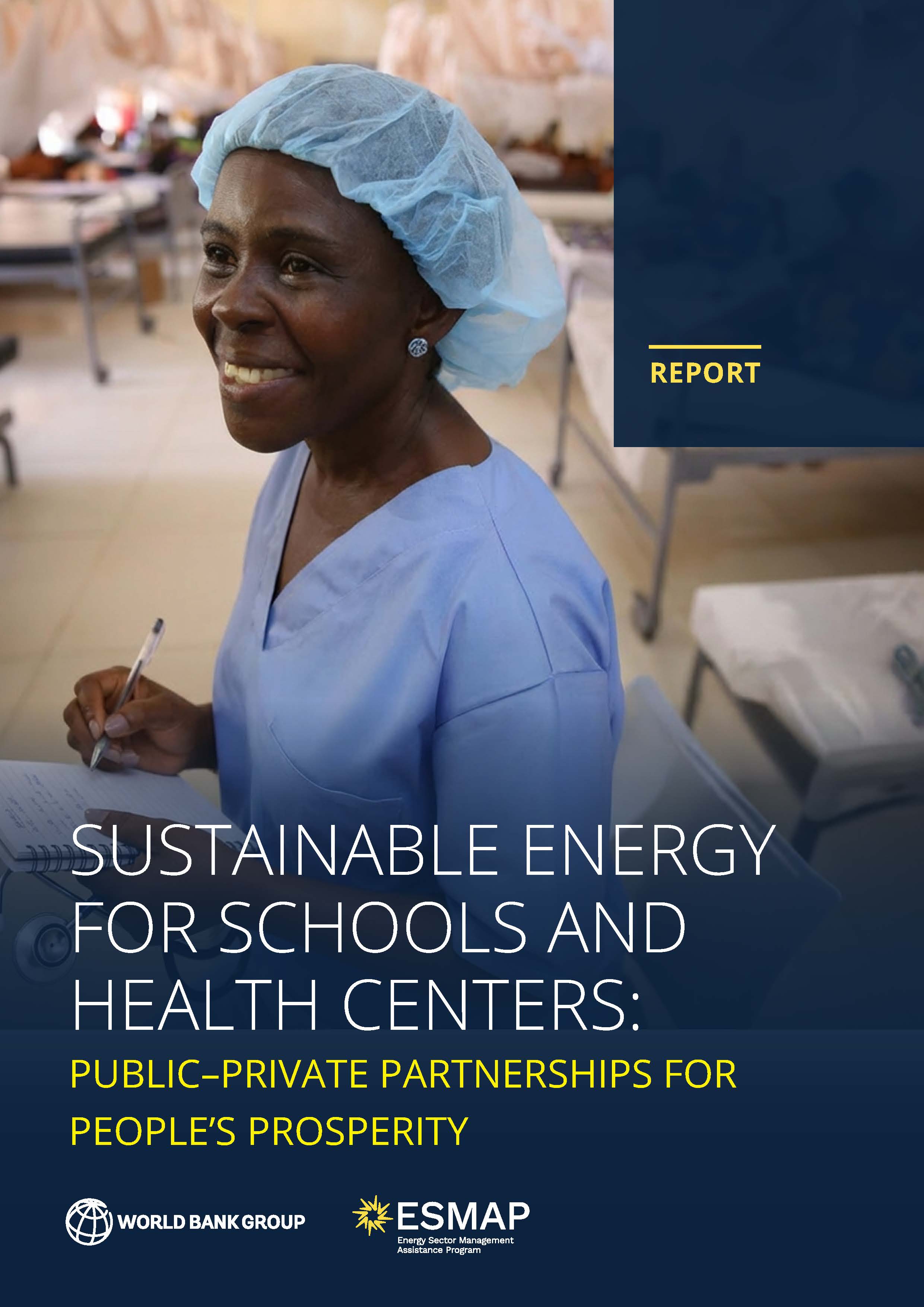
NOW AVAILABLE IN FRENCH: Énergie durable pour les écoles et les centres de santé : Partenariats public-privé pour la prospérité des populations
Le rapport préconise une transition des installations solaires ponctuelles vers des modèles axés sur la performance et fondés sur la prestation de services, afin de garantir une alimentation électrique fiable et pérenne pour les institutions publiques. Il ne s'agit pas seulement de déployer une technologie, mais de s'assurer que les lumières restent allumées, que les équipements médicaux continuent de fonctionner et que les élèves puissent réaliser leur plein potentiel.
Capacity Building
E-Learning Course on Floating Photovoltaic
ESMAP and the Government of Korea, through the Korea Program for Operational Knowledge (KPOK), launched a fully online, self-paced e-learning course on Distributed Photovoltaics (DPV) for World Bank Group clients. Covering the full DPV enabling ecosystem — from fundamentals and use cases to economic, regulatory, technical, and grid integration considerations — it draws on practical examples and international case studies to illustrate how DPV can reduce costs, improve electricity access, strengthen grid resilience, and advance clean energy transitions. Key topics include integrating DPV into national energy strategies, incentive mechanisms for market development, the role of regulators in grid stability and fair compensation, and how utility business models can adapt to increasing customer-led adoption, alongside practical guidance on interconnection procedures, financing, and technical and safety standards. Learning materials were developed by Sustainable Energy Africa in partnership with GET.transform, drawing on ESMAP's From Sun to Roof to Grid series.
>> Register for the Self-Paced Training
Joint Training |Third Capacity Building Academy for Renewable Energy Tenders
The training was jointly delivered by ESMAP’s Sustainable Renewables Risk Mitigation Initiative (SRMI), the European Bank for Reconstruction and Development (EBRD), the Power Futures Lab (PFL), and GET.transform.
>> Learn more
Energy Modelling Platform - Global 2026
With ESMAP's support, the EMP-G 2026 training brought together practitioners for two specialized tracks — Geospatial Data Management and OnSSET/Electrification Planning — equipping participants with practical tools and methodologies to advance energy access planning. ESMAP's funding and technical engagement were central to the delivery of both tracks, reflecting its ongoing commitment to building the analytical and institutional capacity needed to drive evidence-based electrification planning. An event proceedings and summary document will be available for those seeking further information on the training content and outcomes.
>> Learn more
ESMAP Building Capacity with MIGA
MIGA partnered with ESMAP to help clients build gender capacity in renewable energy, integrating gender into clean energy investments. In Rwanda, supported by MIGA guarantees, Sucafina expanded economic opportunities for women and youth farmers.
>> Learn more
ESMAP’s Energy Storage Academy | Energy Storage Systems for the Caribbean and Rwanda
The ESMAP Energy Storage Academy is a flagship training initiative designed to help countries build the expertise needed to integrate energy storage into their power systems. In this edition, more than 100 energy professionals from 40 governments and institutions across the Caribbean and Rwanda came together over five days of virtual learning to explore the technical, operational, procurement, and policy considerations that shape energy storage projects, drawing on insights from World Bank Group and industry experts. Building local capacity is essential to helping countries strengthen energy security, improve system resilience, and maximize the benefits of new energy investments, which is precisely why initiatives like the Academy are so valuable. We extend our sincere thanks to the experts and participants whose knowledge and experience made this edition of the Academy a success.
>> Learn more | Register to Browse the Training
Partners' Corner
Hydrogen for Development (H4D) Celebrates A Membership Milestone
When the Hydrogen for Development Partnership (H4D) launched at COP27 in 2022, it had 12 members and an ambitious idea: accelerate clean hydrogen and its derivatives - green steel, ammonia, and methanol - in the markets that need it most. Three years later, H4D has grown to 60 partners. ESMAP and its broader operational programs will keep supporting clean hydrogen as a strategic enabler of the energy transition, energy security, industrial decarbonization, and sustainable economic development.
>> Follow the Conversation on LinkedIn
Infrastructure Powers Economies, but People Drive Progress
As Africa expands energy access and modernizes its power sector, investing in people will be just as important as investing in infrastructure.
>> Follow the conversation on LinkedIn
WEN-Africa 2025 Annual Report
WEN-Africa was born from an ESMAP-backed push to close Africa's energy gender gap — launched in Kigali, Rwanda in February 2024 to advance women's leadership in the energy sector. WEN-Africa has continued to strengthen its network and advance opportunities for women across Africa’s energy sector throughout 2025. ESMAP’s support enabled the Secretariat to engage partners, facilitate knowledge exchange, strengthen collaboration, and promote initiatives focused on women’s professional development and leadership.
>> Download the Report and learn more
WEN-Africa | From Informality to Productivity: A Better Policy Pathway for Women-Owned Businesses in Africa
Across Africa, millions of women build businesses that never appear on a formal register — not because they're avoiding the system, but because the system hasn't yet given them a reason to join it. For years, policy has chased a simple number: how many women-owned businesses can be moved from informal to formal. The real measure of progress isn't how many women sign up for a license; it's whether their businesses grow more productive, more resilient, and more connected to the markets that can sustain them.
WEN-Africa Partners Engagement Virtual Event
WEN-Africa continues to provide a platform that connects energy-sector institutions across Africa and creates opportunities for knowledge exchange, peer learning, and collaboration. The Partners Engagement Virtual Event brought this approach to life, enabling partners such as TANESCO and ZESA Holdings to share practical experiences and institutional actions to advance women’s participation, leadership, and employment. ESMAP’s support also helps strengthen the network’s growing partnerships and provides space for partners to learn from one another and translate shared commitments into action.
>> Learn more
WePower Conference
The WEN-Africa Secretariat recently participated in the WePOWER Conference in Sri Lanka, marking a significant opportunity for cross-regional knowledge exchange between Africa and South Asia. The engagement brought together energy professionals, utilities, and development partners, enabling WEN-Africa to share experiences from its growing network while drawing on WePOWER's approaches to advancing women in the energy sector. Made possible through ESMAP's support, this exchange is helping to channel relevant lessons and good practices back to the WEN-Africa network, informing future programming and strengthening the foundation for gender-inclusive energy transitions across the continent.
>> Learn more
Visiting the ZESTA Project in Zanzibar
With ESMAP's support, WEN-Africa is actively working to expand opportunities for women across Africa's energy sector through professional development, knowledge exchange, mentorship, and institutional engagement. A recent field visit to ZESTA (Zanzibar Energy Sector Transformation and Access Project) offered a valuable opportunity to see this agenda in action, including direct engagement with the ZESTA Gender Team on their Women Employees Mentorship and Coaching Program. ESMAP's investment in this work reflects a broader commitment to ensuring that alongside the expansion of energy infrastructure, equal attention is given to developing the people and institutions that will sustain and lead the sector's long-term transformation.
>> Learn more
Recent Events
ESMAP Webinar | Launch of H4D Knowledge Product: Japan's Hydrogen and Derivatives Framework
>> Learn more | Watch the replay
ESMAP-Africa Region Webinar | Powering West Africa Together: Lessons from the First Cross-Border Grid Connected Solar Procurement
GOGLA/ESMAP Webinar | Measuring What Matters: Consumer-Centric Performance Indicators in PAYGo Results-Based Financing
ESMAP Webinar | Beyond Connections: Informing the Next Decade of Energy Access Policy and Investment
>> Learn more | Presentation
Joint Industry Transition Study Tour, Norway and Sweden
>> Insights and Takeaways | Follow the conversation on LinkedIn
HLPG | From Call to Count: Gender Responsive Energy Actions for the Final Mile
>>Learn more | Watch the replay
Upcoming Events
ESMAP-Africa Energy Learning Series | Liberia Electricity Sector Strengthening and Access Project - Phase 1: Exceeding Expectations in Liberia's Energy Sector | October 8, 2026 | 9:00-10:00 am EDT
>> Register
17th CEM Ministerial Meeting | From Innovation to Investment: What Makes Energy Storage Bankable? Riyadh, Saudi Arabia | October 11-13, 2026
>> Learn more
ESMAP Webinar | From Strategy to Scale: Hydrogen Hub Development in China | October 19, 2026 | 9:00 am EDT
>> Register