





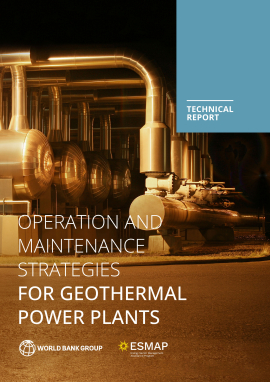
Operation and Maintenance Strategies for Geothermal Power Plants
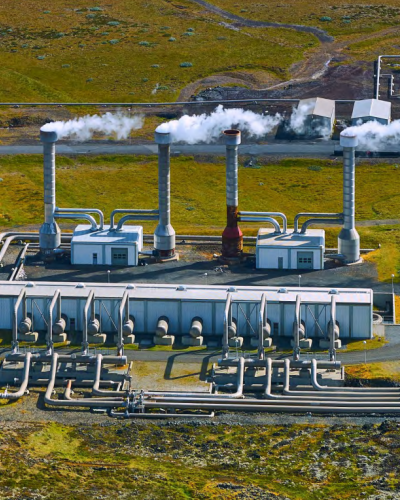
Geothermal power can provide reliable, low-emission electricity for decades, but realizing its full value depends on effective operation and maintenance (O&M). This ESMAP handbook provides practical guidance for designing and implementing site-specific O&M strategies that sustain plant performance, extend asset life, reduce unplanned outages, and protect long-term revenues. Drawing on industry research, practitioner interviews, and survey findings, it identifies key O&M challenges and presents an eight-step framework covering resource and plant assessment, performance monitoring, staffing, costs, financing, asset management, and continuous improvement.
Key Points
- Integrate O&M from the start. Involve future O&M teams in plant design, equipment testing, and commissioning to build operational capacity and prevent costly problems.
- Manage the resource and plant together. Proactive reservoir monitoring and plant performance management are essential to sustaining generation over the project life cycle.
- Address site-specific risks. Scaling, corrosion, well decline, equipment degradation, gas emissions, and remote-site logistics require tailored maintenance and monitoring strategies.
- Build skills and local capacity. Continuous training, knowledge transfer, and local or regional maintenance capabilities can reduce operational and supply-chain risks.
- Plan and finance for the long term. Dedicated maintenance reserves and life-cycle cost planning help prevent deferred maintenance and protect asset value.
- Use data and digital tools strategically. KPIs, SCADA, asset-management systems, and AI-enabled monitoring can improve maintenance decisions and identify problems earlier.
- Apply structured asset management. ISO 55001 provides a risk-based framework for managing geothermal assets, costs, and performance throughout their life cycle.
- Follow an eight-step O&M framework. The handbook guides stakeholders from assessing plant and resource conditions through implementation, monitoring, financing, and continuous improvement.