














A Strategic Framework for Offshore Wind Development in South Africa
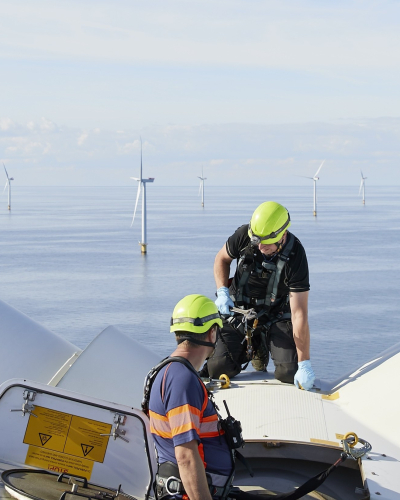
Offshore wind could help South Africa strengthen its energy security, support economic growth, and advance its long-term climate goals.
“South Africa is endowed with nearly 2,800 km of coastline, globally competitive offshore wind resources, strategic ports and coastal industrial corridors. The value of this work is that it strengthens South Africa’s evidence base and preserves future choices.”Dr. Kgosientsho Ramokgopa, Minister of Electricity and Energy, the Government of South Africa |
The new report, A Strategic Framework for Offshore Wind Development in South Africa, developed by the World Bank Group in close collaboration with the Government of South Africa’s Department of Electricity and Energy, explores how offshore wind could contribute to a more reliable electricity system while creating opportunities for jobs, industrial development, and new clean energy industries.
The report identifies around 95 GW of offshore wind technical potential in suitable areas along South Africa’s coastline and assesses pathways for developing the sector over the coming decades. Under its high-growth scenario, offshore wind development could support more than 300,000 full-time equivalent job years, contribute approximately US$6.7 billion in employment wages, reduce electricity generation emissions by up to 530 MtCO₂ by 2050, and help enable emerging industries such as green hydrogen.
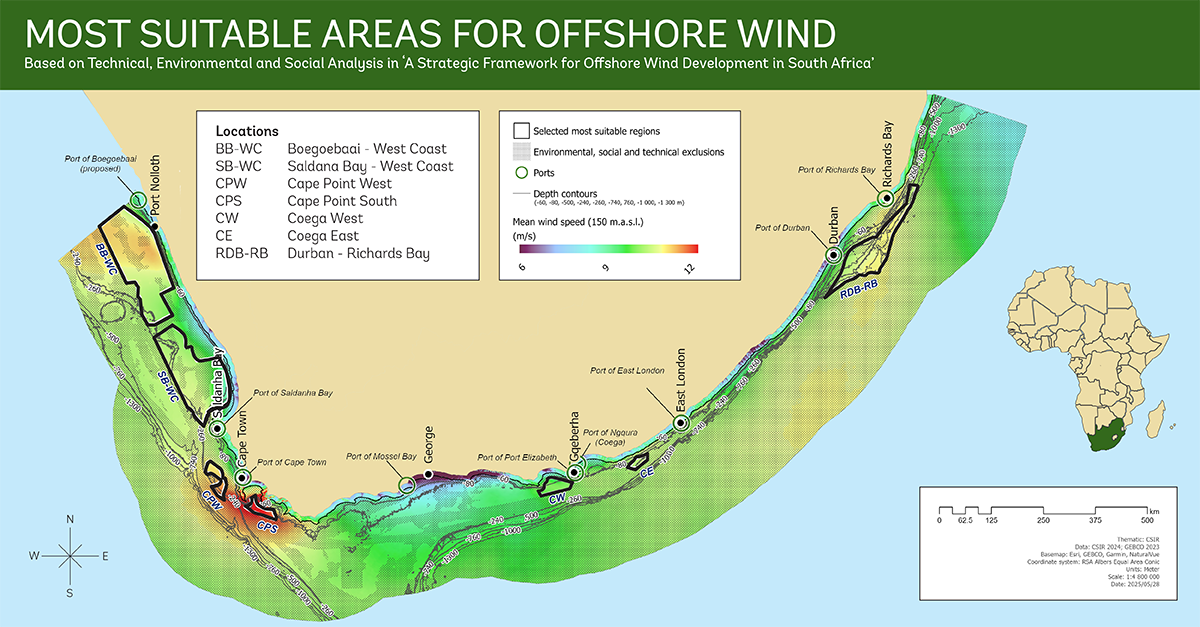
Drawing on three years of analysis and extensive engagement with government, industry, civil society, and marine stakeholders, the report provides practical guidance on the actions needed to establish a successful offshore wind sector. It highlights the importance of long-term planning, enabling policy and regulatory frameworks, investment in grid and port infrastructure, skills development, and supply chain growth to support future deployment.
We are grateful to our partners for their contributions to this report: the Global Offshore Wind Alliance, the Carbon Trust, with support from the Council for Scientific and Industrial Research (CSIR) and Meridian Economics, and with valuable input from The Biodiversity Consultancy.


