











Job Creation Potential of the Clean Energy Transition
ESMAP’s analytical program (2020–2023) shows clean energy investments can boost growth and employment in developing countries, especially through grid reliability and energy efficiency, with jobs generally more productive and better paid.
Most employment gains come from induced effects across the wider economy, while direct jobs are often temporary; supply chain benefits remain concentrated in higher-income countries, limiting near-term impacts locally.
Key challenges include realizing productive use of electricity, managing coal workforce transitions, and limited empirical evidence—particularly ex-post analysis and data on employment impacts in developing countries.
From 2020 to 2023, ESMAP carried out a dedicated program of analytical work to assess the job creation potential of the clean energy transition in low- and middle-income countries. The four flagship reports and nine case studies cover topics ranging from labor market impacts and project-level job tracking to employment effects of clean energy investments in emerging economies.
Analysis of four clean energy scenarios in Sub-Saharan Africa using a computable general equilibrium model found that improving grid reliability and scaling energy efficiency programs deliver the greatest benefits for growth and employment, reflecting the region's chronic power challenges. Renewable deployment and regional electricity trade also yield positive outcomes, though at lower magnitude per dollar spent. Across all scenarios, jobs created tend to be more productive and better paid, with combined interventions generating additional synergies.
Induced jobs — those created through broader economic activity stimulated by energy investments — likely represent most employment gains and may prove more durable than direct construction or operations and maintenance roles. Supply chain jobs, however, are currently concentrated in middle- and high-income countries, limiting developing countries' near-term gains.
Sustainable energy projects generate substantial temporary jobs during construction but fewer long-term operations roles. Two-thirds of direct jobs require only semi- or unskilled labor, which can be sourced locally — supporting community acceptance. Resettlement and livelihood restoration activities, though a small share of project costs, can be significant job creators, particularly for women.
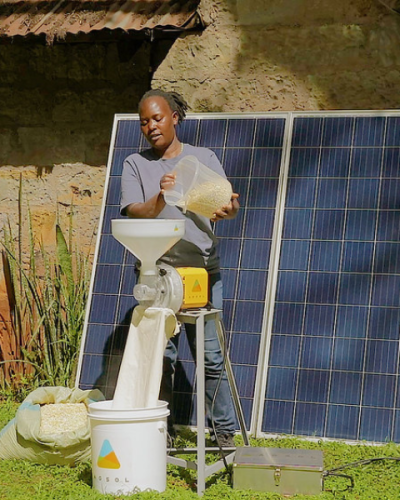
Electrification supports productive use of electricity, though complementary outreach and financing are needed to realize this potential. Finally, transitioning coal workers into clean energy roles is complicated by skills mismatches, lifestyle factors, and often lower wages in green jobs.
The report found that the literature on employment impacts of the energy transition is dominated by ex-ante modeling, with limited use of ex-post methods that could better establish causality. Coverage of developing countries remains thin, and both approaches largely overlook jobs induced by greater electricity availability.