





Search Results


Accelerating Decarbonization
The world is not on track to achieving the Paris Climate Agreement goal of mitigating a global temperature rise. Choices made today will lock in emissions trajectories for years to come and leave communities vulnerable to climate impacts. Yet, the world has a historic opportunity and necessity to change course while also fulfilling the Sustainable Development Goals (SDGs).
The World Bank Group has been instrumental in helping countries address climate change and aligning our financing flows with the goals of the Paris Agreement through the WBG’s new Climate Change Action Plan reaffirms this unrelenting commitment.
Decisive decarbonization actions are needed in developing countries where population is growing at an average 1.3% per annum and GDP at 4%. There is a window of opportunity to shape a low carbon future in the context of efforts to achieve universal energy access, higher disposable incomes, continued urbanization, and industrialization, as well as higher temperatures as a result of locked-in climate change.
The World Bank Group, through ESMAP, is uniquely positioned to support client countries in accelerating decarbonization by helping them adopt innovative technologies and solutions, leapfrogging old technologies that could have locked-in carbon emissions for decades. ESMAP is also committed to equitable decarbonization efforts that advance gender equality.

Geothermal Direct Use
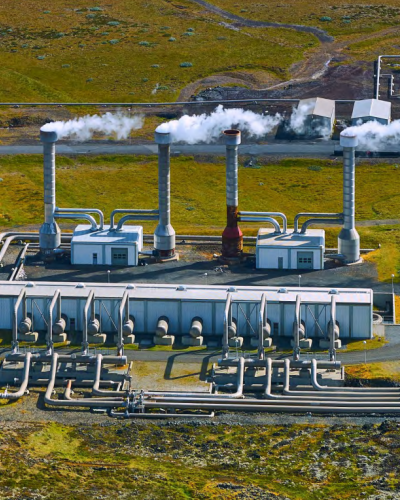
Even though geothermal energy has been utilized directly for centuries, currently, it is mainly used in balneology and heating applications in China, North America, and Northern Europe. At the end of 2019, it was estimated that installed thermal power capacity for direct utilization was a modest 110 GWt. Geothermal energy has gained growing recognition for its potential to provide clean and reliable heat energy to support industrial decarbonization.
Geothermal direct use is the use of the heat energy from geothermal resources without an intervening medium, as opposed to its conversion to electrical energy. It can support economic activity, create jobs, promote gender equality, and displace greenhouse gas-intensive fuels currently used for heating contributing to global decarbonization efforts.
To promote wider adoption of geothermal energy, challenges must be addressed. The limited information and familiarity about geothermal direct use and its potential; matching of the resource to the market; transporting of heat energy or goods; and barriers related to cost of investments relative to the economic value of a lower temperature heat source, all contribute to the need for widespread adoption of geothermal energy.

Energy Climate Finance
ESMAP serves as a think tank for climate finance by conceptualizing and developing high-impact programs that can leverage financing for climate action. To date, ESMAP has been instrumental in establishing five climate finance programs and expanding World Bank investments for energy transition, in partnership with Clean Technology Fund (CTF), Green Climate Fund (GCF), and a host of bilateral donors.
ESMAP provides a comprehensive combination of clean energy advisory services and analytics, project development support, and partnerships with climate finance institutions to World Bank teams and their country clients. This approach has been replicated for energy storage, renewable energy risk mitigation, and coal transition, in which ESMAP identified the investment need, helped forge global consensus on the approach to addressing risks and costs, developed program proposals for climate finance, and supported countries to develop an investment project pipeline for IBRD/IDA blended with concessional climate finance. Now, there is further potential to do the same in efficient and clean cooling, offshore wind, net zero emissions buildings, industrial decarbonization, and green hydrogen under ESMAP’s 2021-2024 Business Plan.