


















Charging Ahead: Namibia and the Energy Storage Revolution
For decades, Namibia has imported most of its electricity from neighboring countries, leaving households and businesses exposed to supply shortfalls and price swings it cannot control.
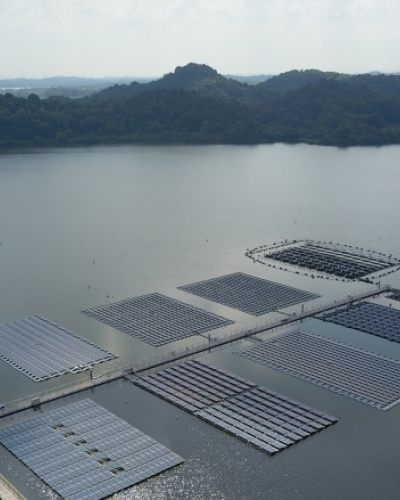
The country has world-class solar and wind resources. What it lacks is the means to make that power reliable around the clock. Energy storage such as batteries, which capture surplus renewable power and dispatch it on demand, change that equation. Namibia is now one of a growing group of developing countries at the forefront of a global push to make it happen.
With concessional financing from the Green Climate Fund and technical assistance from the World Bank's Energy Sector Management Assistance Program (ESMAP), national utility NamPower is building the foundations for utility-scale energy storage deployment.
A member of ESMAP's Energy Storage Partnership, a global coalition working to accelerate storage deployment in developing countries, Namibia's utility is part of an expanding movement to make energy storage a practical reality globally. The goal? To break the cycle in which developing countries remain locked out of cheap, clean power because no one has solved the intermittency problem.
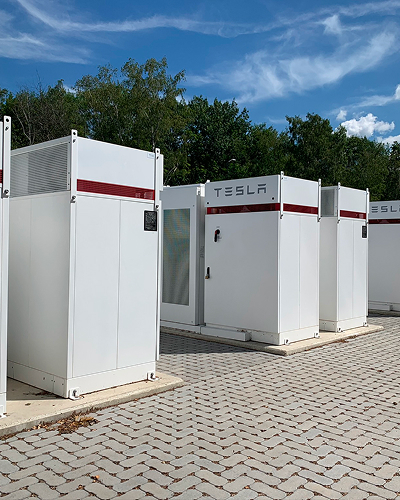
For NamPower's Senior Manager for System Security and Planning in Transmission Kandara Mukusuka, an ESMAP study tour that brought together energy experts from across the developing world to explore long duration energy storage technologies and market developments in the United States added useful perspective to those conversations. “The study tour helped shift the conversation internally. Seeing utility-scale battery storage operating in real grids, solving real problems, showed that this is not a technology of the future — it is available now, and it works.”
Among the takeaways from the study tour was a sharper appreciation of what makes some markets succeed where others stall. “What struck me most was how much the enabling environment matters,” said Mukusuka. “The countries that are getting this right have not necessarily moved fastest on the hardware. They have moved fastest on the regulatory questions. That is the lesson we are bringing home to Namibia.”
But building energy storage systems is, in many ways, the easier part. The harder problem is what comes next. Once a storage system is running, how does a utility get paid for what it provides? NamPower is now putting that question to its regulator. Across Africa and the developing world, utilities and governments are grappling with the same issue. Energy storage does not behave like a conventional power plant. It steadies the grid, absorbs renewable surpluses, and can defer hundreds of millions of dollars in transmission investment. Yet in most countries, the regulatory rules to recognize and remunerate those services simply do not exist.
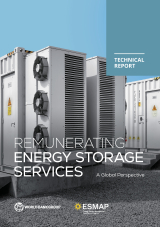
So, what does work? A new World Bank Group report, Remunerating Energy Storage Services: A Global Perspective, goes looking for answers in the markets that have actually cracked it. The findings are unambiguous: revenue certainty is the single most important factor in unlocking private investment in storage. In advanced electricity markets such as Australia, the United Kingdom and the United States, storage projects are recognized of its own kind asset class and granted access to different power markets and compensation for the same services as other energy assets provide. They can even stack revenues across multiple energy markets. But in most developing countries that is not yet feasible. There, the more practical route is long-term procurement of contracts and power purchase agreements that provide a bankable revenue stream over a timeframe long enough to support project finance. Such contracts give lenders the revenue certainty they need, while allowing governments and utilities to procure flexibility at least cost.
NamPower's Chief Operating Officer Ben Mingeli knows the issues first-hand. “The question we are dealing with is the challenge every utility in our position faces: we can see the value that battery storage delivers to the grid, but how do we make sure that an investment is financially sustainable for NamPower and fair to our customers?”
Part of the answer lies in the report's emphasis on ensuring energy storage is the least-cost option in resource planning. “For a utility like ours, operating in a cost-reflective market, that guidance is directly relevant to the conversations we are now having with our regulator,” says Mingeli.
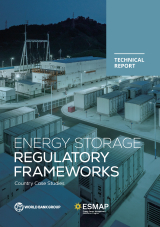
On definition of regulation, the lessons are just as clear. Almost every country that has successfully scaled storage made the same foundational move: it stopped treating batteries like power plants. Storage is a dual-mode asset. It charges and discharges. Force it into licensing categories and tariff structures designed for conventional generation and investors will walk away, deterred by double-charging of network tariffs, exclusion from ancillary service markets, and rules that were never written with them in mind.
The good news is that energy arbitrage (charge at low price and discharge at high price) and energy shifting (charge during surplus renewable generation and discharge during high demand) are natural starting points, services where batteries outperform conventional alternatives and where even modest early procurement can get a project pipeline moving.
None of this demands recreating the complexity of the world's most sophisticated electricity markets. The countries that have made the most progress did so by getting a sequence of fundamentals right: ensuring storage is properly evaluated when governments plan their grids rather than treated as an add-on, defining storage in law, opening it up to well-defined grid services, and putting compensation arrangements in place that developers and lenders can actually work with.
For Namibia, the conversation NamPower is now having with its regulator is exactly the one this work was designed to support. The regulatory framework that emerges can support utilities like Nampower to see that energy storage fulfills its promise as a commercially viable, replicable solution — and for that experience to become a model that others across the region can learn from. The resources are there. The investment is in place. What happens next depends on getting the rules right.