












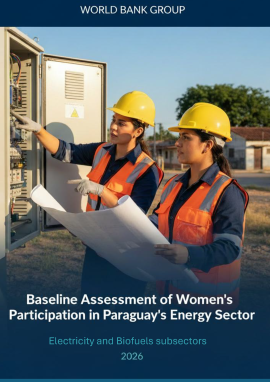
Baseline Assessment of Women’s Participation in Paraguay’s Energy Sector
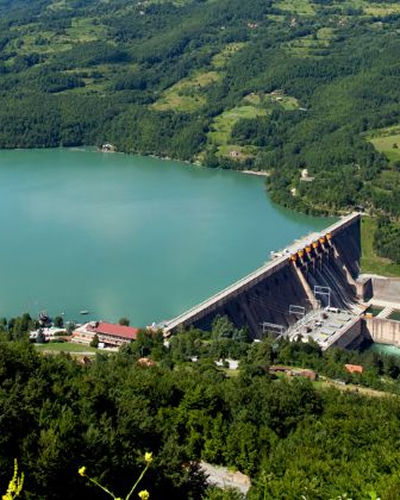
Paraguay’s energy sector plays a strategic role in the national economy and has a distinctive institutional and technological structure. The country operates one of the world’s cleanest electricity systems, with 99.6% of power generated from hydropower, making Paraguay a major exporter of renewable electricity through the binational Itaipú and Yacyretá dams. At the same time, final energy consumption remains dependent on imported fossil fuels, particularly in transport and industry. Although electricity generation accounts for a relatively small portion of GDP within the utilities sector, its macroeconomic importance is substantial due to export revenues and its enabling role across the economy.
Planned expansion under ANDE’s Generation Master Plan 2024–2043, including solar and small hydropower, may generate new technical employment opportunities, increasing the importance of workforce development and inclusive recruitment practices. Establishing a baseline of women’s participation in the energy workforce is timely, as Paraguay’s energy sector expands and attracts increasing private investment. Identifying gender gaps at this stage enables policymakers and firms to address structural barriers before they become entrenched, while also seizing opportunities to broaden employment, especially for women and youth, and strengthen the technical talent pool needed to sustain sector growth.
This assessment addresses a key evidence gap: Paraguay lacks consolidated, gender-disaggregated employment data for the energy sector beyond broad national labor statistics. The study provides an initial snapshot of women’s representation in selected subsectors—the electricity generation and biofuel production subsectors—using two complementary primary sources: (i) an Employer Survey capturing workforce composition and institutional policies, and (ii) a Worker Survey capturing perceptions of workplace conditions and barriers. The findings are descriptive and exploratory, intended to inform dialogue among stakeholders and identify areas for further analysis.